 Skip to the content
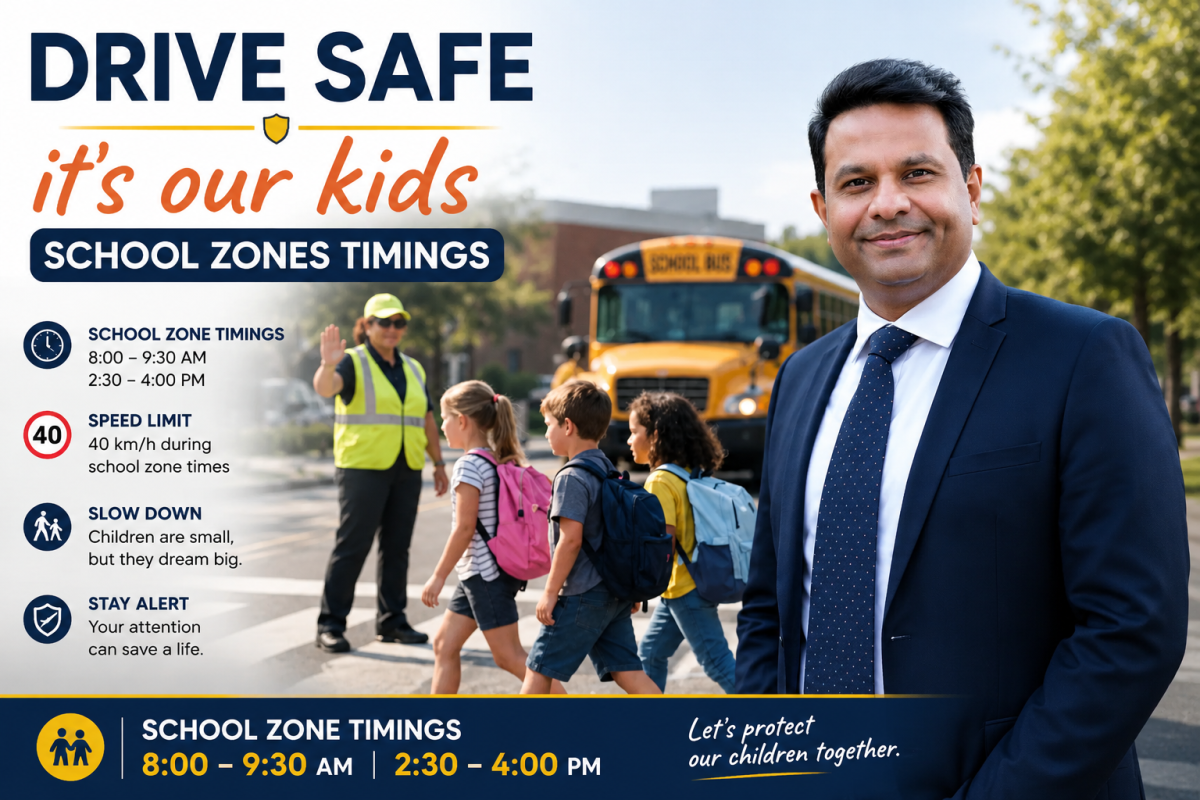
At 8.30 on a school morning, the difference between a safe arrival and a near miss can come down to a few seconds – a car turning too fast, a child stepping out from behind an SUV, or a distracted driver ignoring flashing lights.
That is why school zone safety measures matter so much. For families in growing areas like Parramatta, where traffic volumes, construction activity and school enrolments continue to rise, getting these settings right is not a nice extra.
It is basic community safety.
As a councillor, I hear from parents, grandparents, teachers and nearby residents who all want the same thing: children getting to and from school safely without every drop-off feeling stressful.
The challenge is that no single fix solves the problem. Real safety comes from a mix of road design, clear rules, local enforcement, and everyday cooperation from drivers and families.
Why school zone safety measures need local attention
School zones bring together young pedestrians, buses, parked cars, cyclists, delivery vehicles and commuters in a very small space. Children do not judge speed and distance the way adults do.
They can be impulsive, they can be hidden from view by larger vehicles, and they often move in groups. That makes the road environment around schools very different from an ordinary suburban street.
In established neighbourhoods, the issue is often ageing infrastructure that no longer matches current traffic.
In newer or fast-changing areas, the problem can be the opposite – roads and intersections designed for one level of use now carrying much more. Add wet weather, poor visibility, illegal parking or rushed morning routines, and the risk lifts quickly.
This is where councils, schools, police, transport agencies and residents all have a role. Some decisions sit with local government, such as line marking, kerb changes, footpath upgrades and advocating for local improvements.
Other measures, such as school zone speed enforcement on state-controlled roads, involve state agencies. Residents do not need to know every level of responsibility, but they do deserve joined-up action.
The school zone safety measures that make the biggest difference
The most effective safety measures usually look quite ordinary. Clear signs, visible crossings, lower speeds, better lighting and sensible parking controls are not flashy, but they save lives.
Reduced speed limits in school times remain one of the strongest protections because they cut both stopping distance and crash severity.
A 40 km/h zone gives drivers more time to react if a child steps out unexpectedly. But the sign alone is not enough. If the road feels wide and fast, many motorists will still drive too quickly.
That is why design matters alongside enforcement.
Marked crossings near school gates and along common walking routes are another key measure. Where there is heavy foot traffic, supervised crossings can be especially helpful for younger students.
In some locations, raised wombat crossings, kerb build-outs or pedestrian refuges can slow vehicles while making people on foot more visible.
Parking controls are just as important as speed. Illegal stopping near crossings, double parking and queueing in no-stopping zones create dangerous sightline problems.
Parents often tell me they are only stopping for a moment, but in a school zone a moment is enough to block a driver from seeing a child.
Good pick-up and drop-off design needs to be practical, or people will ignore it. That means thinking carefully about kiss-and-ride areas, short-stay parking, bus access and safe walking routes from slightly further away.
Around some schools, timed restrictions and one-way traffic arrangements can improve flow. These changes can work well, but only if the school community understands them and nearby residents are consulted.
A traffic plan that looks tidy on paper can shift congestion into surrounding streets if local conditions are ignored.
Road design matters more than good intentions
One of the hardest truths in road safety is this: we cannot rely on everyone behaving perfectly every day.
People get distracted. They run late. They make poor choices. Good road design should expect human error and reduce the harm when it happens.
That is why traffic calming around schools deserves serious attention. Narrower lane treatments, raised thresholds, sharper visual cues and better pedestrian priority can all encourage slower, more cautious driving.
These treatments do more than tell drivers to slow down. They make slower driving feel natural.
Footpaths also matter. If families are forced onto grass verges, muddy edges or broken pavement, they will take shortcuts and cross in riskier spots. Safe access is not just about the school gate.
It includes the whole walking journey, especially for parents with prams, children on scooters and older carers who need level paths and decent kerb ramps.
Lighting, tree maintenance and sightlines should not be overlooked either. A crossing can be technically present but still feel unsafe if foliage blocks views or if winter afternoons leave parts of the road in shadow.
These are the details residents notice first because they deal with them every day.
Behaviour still counts – especially for adults
Even the best street design cannot protect children if adults ignore basic road rules. Drivers speeding through a school zone, doing U-turns near gates, stopping on crossings or using a mobile at the wheel all add risk.
The same goes for adults setting poor examples by crossing between cars instead of using the crossing a few metres away.
Parents and carers are often under pressure at school times. Mornings are rushed, afternoons are crowded, and nobody wants to be late.
But school zone behaviour sets the tone for the entire community. When adults show patience, follow the signs and choose the safer option over the quickest one, children notice.
Schools can help by communicating clearly with families, especially at the start of term.
Simple reminders about parking rules, walking routes and drop-off procedures often prevent avoidable problems. Councils can support that effort with signage, ranger presence where needed, and practical engagement rather than just penalties.
There is also a strong case for encouraging more walking where possible. Fewer cars at the gate usually means a safer environment overall.
Of course, this depends on distance, weather, disability access and family schedules. It is not realistic for every household. Still, where routes are safe and well connected, walking school buses, supervised group walks and better local crossings can reduce congestion and improve safety at the same time.
What local councils can realistically do
Residents often ask who they should contact when a school zone feels unsafe.
The answer depends on the road, but councils remain one of the most accessible points of contact because we can inspect local conditions, gather community feedback and push issues through the right channels.
At council level, practical action can include reviewing parking conditions, improving line marking, trimming vegetation, upgrading footpaths, assessing traffic flow, requesting speed reviews, and working with schools on safer access plans.
Councils can also advocate strongly where state-controlled roads or transport decisions affect local school communities.
The trade-offs are real. A resident may want more no-stopping zones for visibility, while another may worry about losing parking near home.
Parents may support a one-way system, while nearby streets fear extra congestion. Good decision-making means looking at evidence, listening carefully and making choices that put child safety first without pretending there are no impacts.
This is also where community reporting is valuable. If near misses keep happening at the same corner, if sightlines are blocked every afternoon, or if a crossing is badly placed for actual walking patterns, those details help build the case for change. Data matters, but lived experience matters too.
A safer school trip starts before the bell
The most effective school zone safety measures are the ones that become part of daily routine. Leave a few minutes earlier so there is less temptation to rush. Park legally even if it means a slightly longer walk.
Teach children to stop, look, listen and use the crossing every time. If you drive, slow down before you enter the zone, not halfway through it.
For local leaders, the job is to keep pushing for practical improvements, not wait for a serious incident before acting.
For schools, it means staying in close contact with families and flagging issues early. For residents, it means treating school safety as a shared responsibility rather than somebody else’s problem.
Children should not have to navigate avoidable hazards just to get an education.
When a community takes school access seriously, it shows in small but powerful ways – calmer streets, clearer crossings, more considerate parking and less daily anxiety for families.
That is the standard worth working towards, one street and one school at a time.
