 Skip to the content
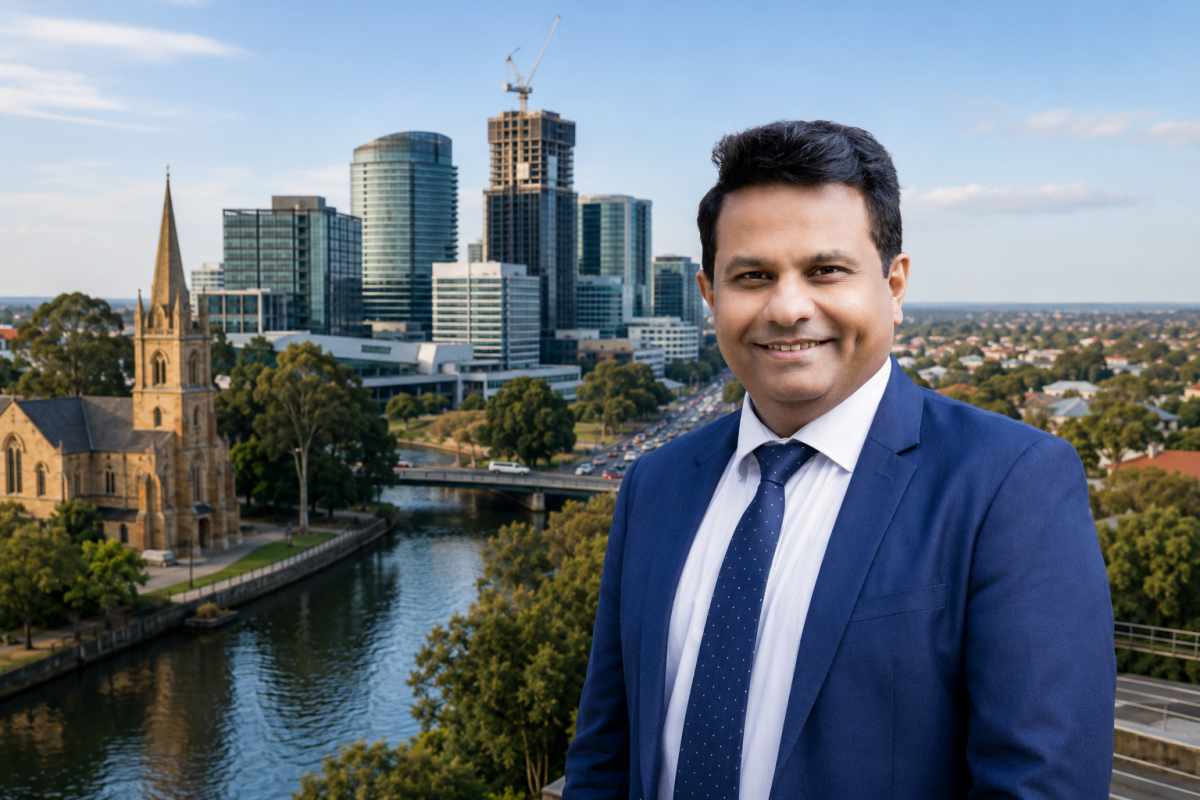
When people ask about Parramatta GDP before and after 2023, they are usually asking a practical question, not a theoretical one.
Is our city still growing, are local businesses feeling it, and will that growth translate into better jobs, transport, housing and community services for residents?
Those are the issues that matter at street level, and they are exactly why economic figures should never be treated as just numbers on a chart.
Parramatta has long been described as Sydney’s second CBD, but by 2023 that label was no longer just aspirational.
It reflected a city that had been steadily building economic weight through office development, education, health, professional services, construction and public investment.
Looking at what came before and after 2023 helps explain where Parramatta is heading, and just as importantly, what local government can do to make sure growth benefits the people who live here.
Understanding Parramatta GDP before and after 2023
First, a small but useful clarification. When people say GDP for a local area like Parramatta, they are often referring to gross regional product, or GRP.
It is the local version of GDP and gives a broad picture of the total value of goods and services produced in the area.
It is not a perfect measure of wellbeing, and it does not tell you whether every household feels better off, but it is still one of the clearest ways to track economic momentum.
Before 2023, Parramatta’s economy had already shown strong underlying growth over many years. That growth came from a few big shifts happening at once.
Government agencies were moving west. Businesses were treating Parramatta as a serious commercial centre rather than a fringe option. Major health and education institutions were expanding.
Population growth across Western Sydney was also pushing more activity towards the city.
At the same time, the years leading into 2023 were not straightforward. Like much of Sydney, Parramatta had to absorb the effects of the pandemic, changing work patterns, pressure on small businesses, inflation and rising construction costs.
Some sectors bounced back quickly, especially professional services and public administration, while others faced a slower recovery. Retail, hospitality and smaller operators had to work much harder to regain confidence and foot traffic.
What changed after 2023?
After 2023, the story became more mixed, but also more mature. Parramatta was no longer just in a growth phase driven by promise. It was increasingly being tested as a functioning major centre.
That matters because there is a difference between attracting investment and converting that investment into a city that works well for residents, workers and businesses every day.
The post-2023 period brought continued strength in sectors tied to health, education, government and business services.
Large-scale infrastructure and development activity continued to support the local economy.
The area’s role as an employment hub became clearer, especially as employers looked beyond the Sydney CBD for office space and access to Western Sydney’s workforce.
But there were also real pressures. Higher interest rates affected household spending and housing affordability.
Construction costs complicated delivery timelines for projects that residents had been promised.
The office market was changing, with hybrid work altering demand patterns and putting pressure on some commercial assumptions. In simple terms, Parramatta kept growing, but the conditions became tougher.
That is why talking about Parramatta GDP before and after 2023 needs more nuance than a simple up-or-down answer. The economy did not suddenly transform overnight.
What changed was the quality of the challenge. Before 2023, the main question was whether Parramatta could establish itself as a major economic centre.
After 2023, the question became whether it could manage that growth fairly, efficiently and with the right local infrastructure.
Why GDP growth does not always feel like progress
This is the part residents often understand better than economists. A rising economic number does not automatically mean life feels easier.
A city can post stronger output while families are still worried about rent or mortgages, small businesses are still dealing with higher overheads, and commuters are still frustrated by congestion or service gaps.
That is why local leadership matters. Council does not control every lever of the economy, but it does shape the environment in which growth happens.
Planning decisions, local activation, public domain improvements, support for neighbourhood centres, advocacy for transport and the delivery of community infrastructure all influence whether economic gains are broadly shared or narrowly felt.
For Parramatta residents, the real test after 2023 is not simply whether the city’s output is larger than before. The real test is whether growth supports safer streets, stronger local centres, more liveable neighbourhoods and better opportunities for young people, families and small business owners.
The sectors driving Parramatta’s economy
A close look at Parramatta GDP before and after 2023 shows that some sectors matter more than others. Health is a major one, supported by the local hospital and surrounding medical and allied services.
Education is another, with universities and training institutions helping bring students, jobs and related spending into the area.
Professional services, finance, public administration and legal services also play a large role in Parramatta’s economic profile.
These sectors reinforce the city’s status as a business and government centre for Western Sydney. Construction has also been significant, though it can be volatile depending on the broader market, financing conditions and supply costs.
Retail and hospitality still matter deeply, especially for local character and employment, but they are more exposed to shifts in consumer confidence.
When residents feel pressure from cost-of-living increases, these businesses often feel it first. That is why headline economic growth can sit alongside genuine stress for shopkeepers and family-run operators.
What council decisions mean for local growth
Residents are right to ask how council choices connect to economic outcomes. While councils do not set national interest rates or state tax policy, we do make decisions that affect confidence, amenity and local business conditions.
Planning frameworks influence where jobs can cluster. Investment in public spaces affects whether people linger in local centres or just pass through them.
Events and community activation can help traders during difficult periods.
Equally, councils have a responsibility to question growth that is poorly planned. More towers alone do not guarantee a stronger local economy.
If schools, parks, roads, drainage, parking and community facilities fail to keep pace, the result is frustration rather than confidence.
Sustainable growth means getting the basics right while still planning for ambition.
This is where a people-first approach matters. In my role as a councillor, I see that residents do not separate economic development from daily life.
They judge it by practical outcomes – whether local traffic is manageable, whether parks are maintained, whether main streets are welcoming, whether community facilities are available and whether new development feels balanced rather than imposed.
Parramatta after 2023 – bigger, but under pressure
If there is one fair reading of the post-2023 period, it is this: Parramatta became more economically significant, but also more exposed to the pressures that come with being a major centre.
That is not a failure. It is the reality of growth.
A larger economy attracts investment, employers and services. It can create more local jobs and reduce the need for people to travel long distances for work.
It can strengthen the case for better transport and public infrastructure. These are clear benefits.
Yet a larger economy also increases expectations. Residents expect development to be matched by amenity. Businesses expect smoother approval processes and better access.
Communities expect growth to respect neighbourhood identity, multicultural inclusion and quality of life. If those expectations are ignored, the numbers stop feeling meaningful.
What residents should watch next
The next phase for Parramatta is not just about raw growth figures. It is about resilience and distribution. Can the city keep attracting jobs across different sectors? Can small businesses survive alongside major corporate and government tenants?
Can infrastructure keep up with density? Can council and state government work together instead of shifting blame?
These questions matter more than chasing one impressive statistic. A healthy local economy is one that can weather higher borrowing costs, changes in office demand and population pressure without leaving residents behind.
It is one where growth in output is matched by confidence in the community.
For families, homeowners and local traders, the useful takeaway is simple. Parramatta before 2023 was a city building momentum.
Parramatta after 2023 is a city proving whether it can convert that momentum into lasting local value.
That work is still underway, and it deserves honest attention rather than glossy slogans.
The most helpful way to look at these numbers is to ask not only how much the economy has grown, but who that growth is serving, where the pressure points are, and what practical action will keep Parramatta liveable as it gets bigger.
